Project detail
Kotak Mahindra Bank
Designing banking systems under security and compliance constraints, where trust, authorization, and error prevention are more important than speed.
UX Design
6 months
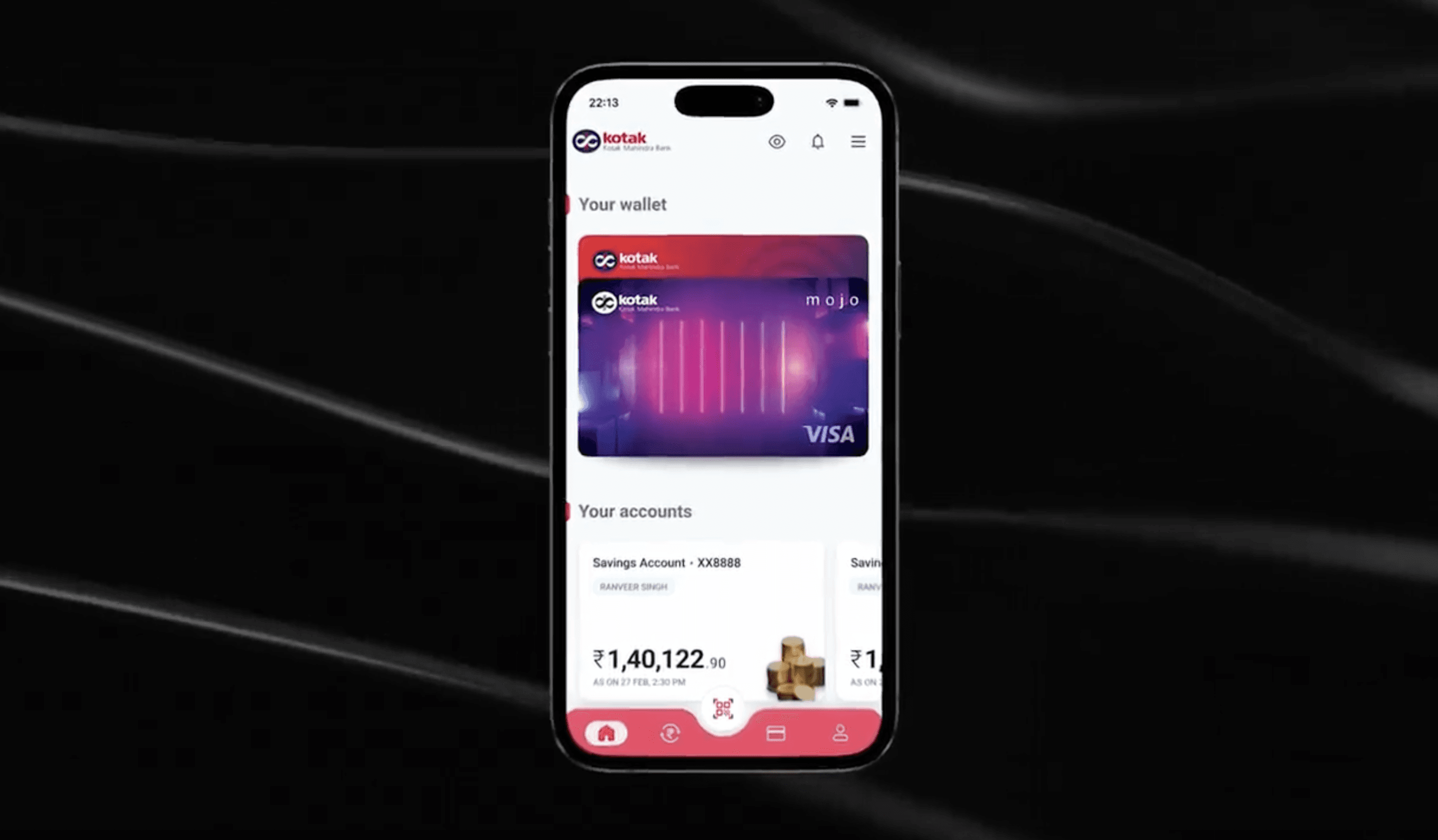
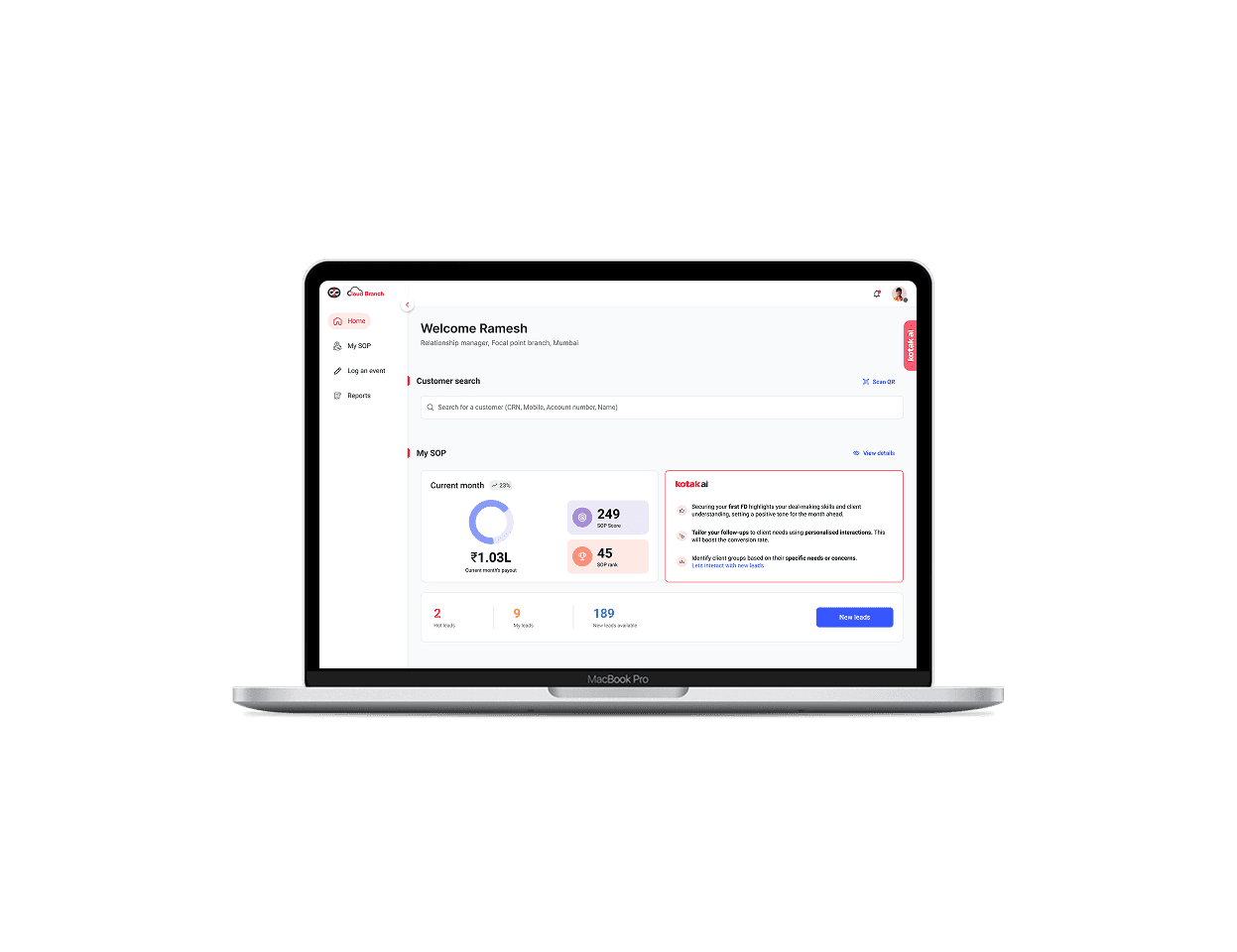
Context
Kotak Mahindra Bank relied on multiple internal tools to support everyday branch operations. This created fragmented workflows, increased training effort, and made compliance tracking harder.
The bank initiated a project to bring these operations into a single internal platform with the goal of improving efficiency, reducing manual work, and strengthening auditability.
My Role
During my six-month internship, I worked with designers, product managers, and business analysts to design workflows for core branch activities.
My responsibilities included:
Designing and refining end-to-end user journeys across 5–10 branch workflows
Supporting paperless transaction flows to reduce manual processing
Designing maker–checker patterns for sensitive actions
Contributing to a shared design system to maintain consistency across modules
Approach
Branch environments are fast-paced and error-sensitive, so clarity and predictability were critical.
I focused on understanding how staff moved through tasks, where mistakes occurred, and how the interface could better support accurate execution.
Workflow mapping: Studied existing processes to identify repetition, breakdown points, and opportunities to simplify steps.
Iterative design: Created wireframes and prototypes, refining them through regular stakeholder reviews.
Compliance by design: Integrated verification and audit requirements directly into flows instead of treating them as afterthoughts.
Key Design Decisions
Unified transaction experience
I helped bring multiple workflows into a single interface so staff could complete tasks without switching tools. This reduced cognitive load and made the system easier to learn.
Role-based permissions
Actions were aligned with staff responsibilities, ensuring that sensitive steps were accessible only to authorized users while keeping routine tasks efficient.
Maker–checker workflow
For high-impact actions, I designed a dual-authorization pattern that improved accountability without significantly slowing down the process.
Paperless journeys
Several flows were redesigned to reduce reliance on physical forms while keeping regulatory checks visible and traceable.
Design system contribution
I contributed components and interaction patterns that supported consistency across the platform and made future expansion easier.
Critical Design Challenge
I was the primary designer for a mini-project that required alignment across product and design stakeholders with differing priorities — particularly around speed, clarity, and compliance.
Requirements evolved frequently, which meant design decisions were often revisited.
To move discussions forward, I grounded conversations in user workflows and operational risk rather than personal preference. With guidance from my manager, I learned to communicate design rationale more clearly, acknowledge constraints early, and steer debates toward practical outcomes.
This experience strengthened my ability to navigate ambiguity and collaborate within complex systems.
Reflection
This project changed how I think about clarity. In high-stakes environments, it is not just a usability principle — it directly supports accuracy and reduces operational risk.
I also learned that constraints are not obstacles to work around, but signals that help place friction thoughtfully and design more reliable systems.